The Hidden Costs of Crypto Trading: How Instant Swaps Save You Money
You’ve done your research. You found the next promising altcoin, timed the market (as best as anyone can), and are ready to make your move. You head to a traditional exchange, execute your trade, and see the new coins land in your wallet. Success, right?
Not so fast. While the trade itself seems straightforward, what you might not see are the silent fees and opportunity costs that nibbled away at your investment. For too long, crypto traders have accepted these “hidden costs” as just part of the game.
But what if there was a smarter way? Enter instant crypto swaps. These platforms aren’t just about speed—they’re powerful tools that can save you significant money. Let’s break down the hidden costs of traditional trading and how instant swaps help you avoid them.
The Stealthy Fee Structure of Traditional Exchanges
On the surface, a centralized exchange (CEX) like Binance or Coinbase often charges a clear trading fee, usually around 0.1% to 0.6%. It seems small, but the real costs are layered beneath.
1. The Spread: The Invisible Bite
This is the biggest and most overlooked cost. The spread is the difference between the highest price a buyer is willing to pay (the bid) and the lowest price a seller is willing to accept (the ask). Exchanges profit from this gap. When you buy instantly at market price, you’re often buying on the ask side, which is higher. This hidden premium can be much more impactful than the stated trading fee, especially in volatile markets or with low-liquidity coins.
2. Network Gas Fees: The Double Whammy
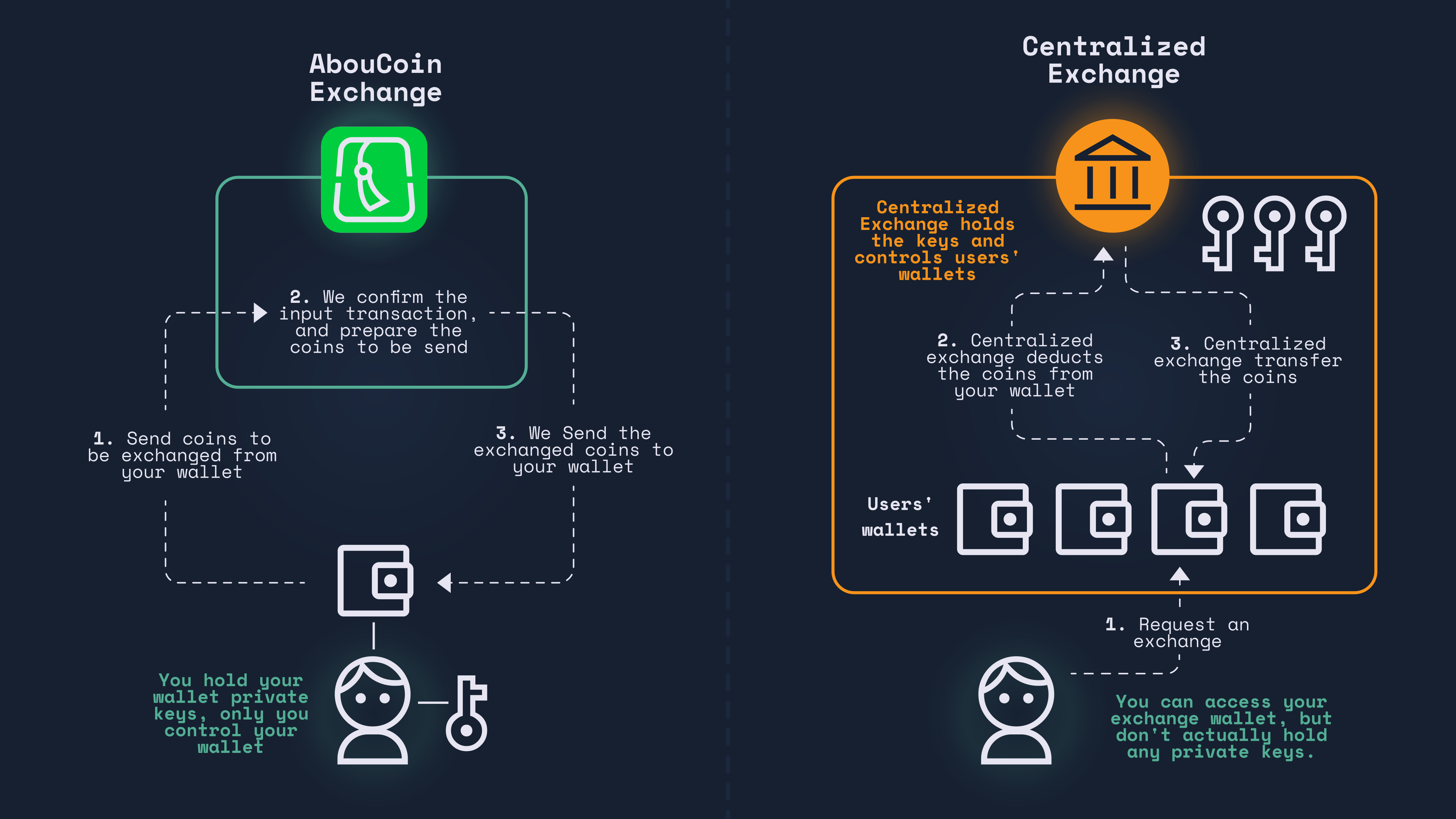
Trading on a CEX isn’t free from blockchain fees. You first have to pay a gas fee to deposit your crypto (e.g., ETH) onto the exchange. Then, after you trade, you pay another gas fee to withdraw your new assets back to your self-custody wallet for safekeeping. These fees add up quickly, turning a simple trade into a multi-fee ordeal.
3. Opportunity Cost: The Price of Time
In crypto, minutes matter. The traditional order book model requires a buyer and a seller to match orders. If liquidity is low for your trading pair, your order might not fill immediately. You could be stuck waiting, watching the market move against you. The profit you could have made if the trade executed instantly is a very real cost.
4. Price Slippage: The Volatility Tax
During periods of high volatility, the price can move significantly between the moment you place a market order and when it finally executes. This difference is called slippage. You might intend to buy at $100, but by the time your order goes through, the average price could be $102. You just lost 2% before any official fee was even applied.
How Instant Swaps Cut Through the Noise
Instant swap platforms (or DEX aggregators) like Uniswap, 1inch, or Changelly work differently. They are designed to minimize these hidden costs.
1. Transparent, All-Inclusive Pricing
A good instant swap platform shows you exactly what you’ll get before you confirm the transaction. The quote you see includes the exchange rate, platform fees, and estimated network gas costs. There are no nasty surprises with the spread because the rate is calculated and locked in from the start.
2. Aggregating Liquidity for Better Rates
Advanced swap platforms don’t rely on a single source of liquidity. They scan dozens of decentralized exchanges (DEXs) and liquidity pools to find you the very best possible rate for your trade. This competition between pools directly benefits you, often resulting in a more favorable effective price than any single exchange could offer.
3. No Deposits/Withdrawals Needed
Since you trade directly from your personal wallet (like MetaMask or Trust Wallet), you completely bypass the deposit/trade/withdrawal cycle of a CEX. You pay one network gas fee for the entire swap transaction, not multiple. This is a massive saving for active traders.
4. Slippage Protection
Every quality swap allows you to set a maximum slippage tolerance. If the market moves too wildly and the price exceeds your set limit, the transaction will fail, protecting you from an unfavorable trade. You only pay the gas fee for the failed transaction, which is often cheaper than accepting a bad slippage-filled trade.
When to Use an Instant Swap vs. a Traditional Exchange
Instant swaps are incredible, but they aren’t a perfect replacement for every scenario.
Use Instant Swaps For:
- Quick, simple trades: Converting between major tokens (e.g., ETH to USDC).
- Privacy and self-custody: Trading without KYC or giving up control of your funds.
- Small to medium-sized trades: Where the single gas fee is cheaper than multiple CEX fees.
Use a Traditional Exchange For:
- Advanced trading: Using limit orders, stop-losses, and margin trading. Be aware that margin and leverage trading is high-risk and often results in large losses.
The Bottom Line: Knowledge is Profit
Understanding the hidden costs of trading is the first step to becoming a more profitable crypto investor. While traditional exchanges have their place for advanced strategies, for the vast majority of simple asset swaps, instant platforms offer a faster, simpler, and—most importantly—cheaper alternative.
By choosing the right tool for the job, you stop letting hidden fees eat into your gains and put more of your money to work for you.
Next time you trade, ask yourself: Am I seeing the full cost? The answer could save you a fortune.
Disclaimer: This content is for informational purposes only and is not financial advice. Always do your own research (DYOR) and understand the risks before investing in cryptocurrency.