Understanding Crypto Exchanges: Types, Differences, Pros & Cons
Cryptocurrency exchanges are the backbone of the digital asset economy, enabling users to buy, sell, and trade cryptocurrencies. However, not all exchanges are the same—they vary in structure, security, and functionality. Choosing the right one depends on your trading needs, security preferences, and level of experience.
In this guide, we’ll break down the different types of cryptocurrency exchanges, their key differences, and the pros and cons of each.
1. Centralized Exchanges (CEXs)
What Are They?
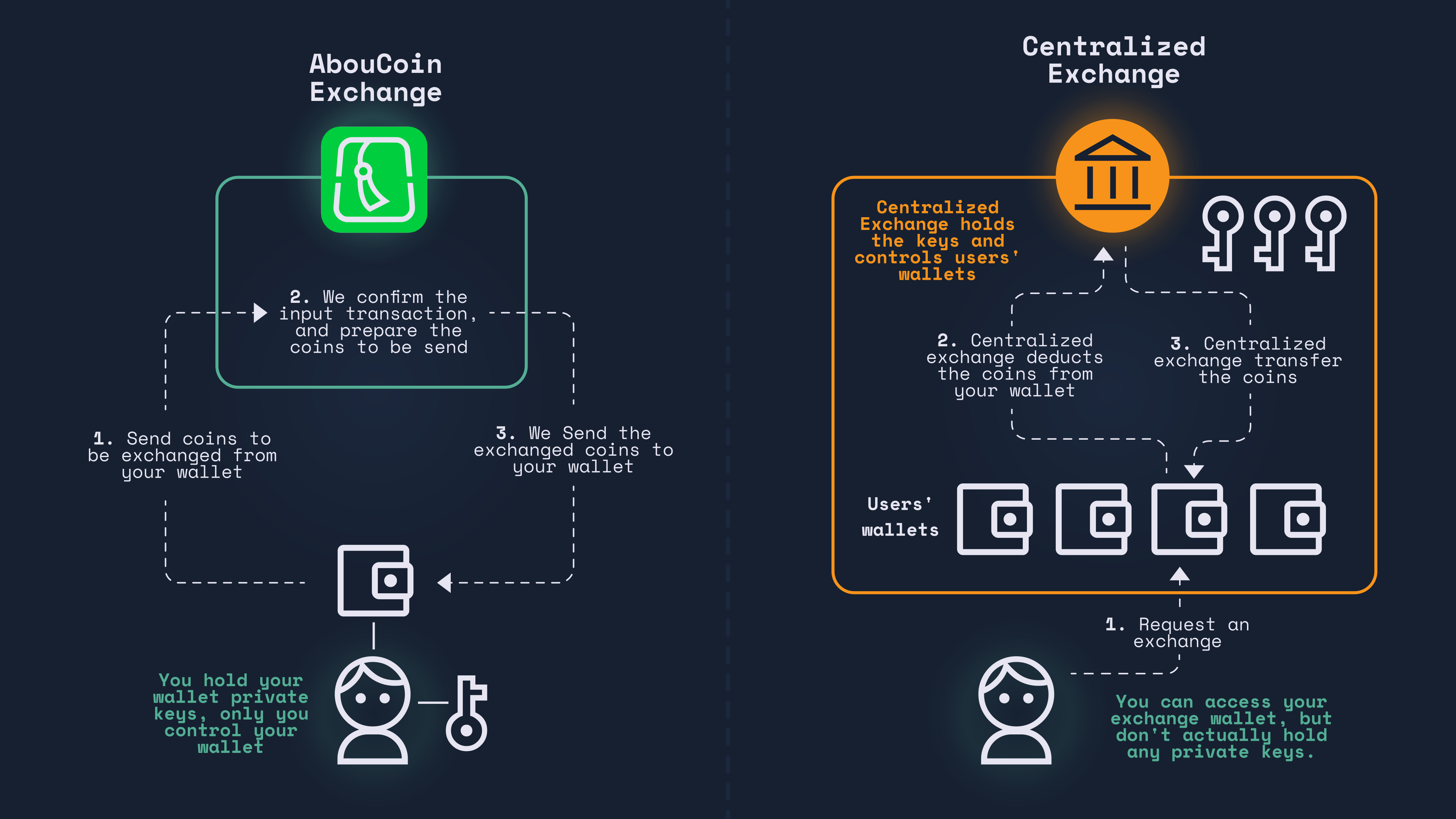
Centralized exchanges (CEXs) are the most common type of crypto trading platforms. They act as intermediaries between buyers and sellers, holding users’ funds and facilitating transactions. Examples include Binance, Coinbase, and Kraken.
Pros of CEXs:
✅ User-Friendly – Easy to use, with intuitive interfaces for beginners.
✅ High Liquidity – Large trading volumes ensure quick transactions.
✅ Advanced Features – Offer margin trading, futures, staking, and lending.
✅ Fiat Support – Allow deposits and withdrawals in traditional currencies (USD, EUR, etc.).
Cons of CEXs:
❌ Custodial Risk – Users don’t control their private keys; exchanges can be hacked (e.g., Mt. Gox).
❌ KYC Requirements – Most require identity verification, reducing privacy.
❌ Centralized Control – Vulnerable to regulatory crackdowns or shutdowns.
2. Decentralized Exchanges (DEXs)
What Are They?
Decentralized exchanges (DEXs) operate without a central authority, allowing peer-to-peer (P2P) trading directly from users’ wallets. Examples include Uniswap, PancakeSwap, and dYdX.
Pros of DEXs:
✅ Non-Custodial – Users retain control of their private keys.
✅ No KYC – Greater privacy since no identity verification is needed.
✅ Censorship-Resistant – Harder for governments to shut down.
✅ Supports DeFi – Integrates with decentralized finance (DeFi) protocols.
Cons of DEXs:
❌ Lower Liquidity – Smaller pools can lead to slippage (price differences).
❌ Complex for Beginners – Requires understanding of wallets (MetaMask, etc.).
❌ Smart Contract Risks – Vulnerable to exploits (e.g., flash loan attacks).
3. Instant Exchanges (Swap Services)
What Are They?
Instant exchanges (or swap services) allow users to quickly exchange one cryptocurrency for another without order books or trading accounts. They aggregate liquidity from multiple sources. Example: AbouCoin Exchange.
Pros of Instant Exchanges:
✅ Fast & Simple – No registration required for basic swaps.
✅ Non-Custodial (Mostly) – Funds go directly to your wallet after the swap.
✅ Wide Coin Selection – Supports many altcoins not available on major CEXs.
Cons of Instant Exchanges:
❌ Lack of History – Since no account registration is needed, users cannot easily check their previous trades.
4. Hybrid Exchanges
What Are They?
Hybrid exchanges combine features of CEXs and DEXs, offering both centralized speed/liquidity and decentralized security. Examples include Loopring and Nash.
Pros of Hybrid Exchanges:
✅ Better Security – Reduces custodial risk while maintaining efficiency.
✅ Faster Transactions – Uses off-chain order matching for speed.
✅ Regulatory Compliance – Some offer KYC options without full centralization.
Cons of Hybrid Exchanges:
❌ Still Evolving – Not as widely adopted as CEXs or DEXs.
❌ Limited Features – May lack advanced trading tools.
5. Peer-to-Peer (P2P) Exchanges
What Are They?
P2P platforms connect buyers and sellers directly, often with escrow protection. Examples include LocalBitcoins (now defunct), Paxful, and Binance P2P.
Pros of P2P Exchanges:
✅ Flexible Payments – Supports cash, bank transfers, PayPal, etc.
✅ No KYC (Sometimes) – Some platforms allow anonymous deals.
✅ Global Access – Useful in countries with strict crypto regulations.
Cons of P2P Exchanges:
❌ Scam Risks – Requires caution when dealing with strangers.
❌ Slower Transactions – Negotiation and payment confirmation take time.
❌ Price Volatility – Rates may differ from market prices.
6. Brokerage Exchanges
What Are They?
These are simplified platforms where users buy crypto at a fixed price (like a retail store). Examples include Coinbase, eToro, and Robinhood.
Pros of Brokerage Exchanges:
✅ Easy for Beginners – Simple buying process, no trading charts.
✅ Instant Purchases – Quick fiat-to-crypto conversions.
Cons of Brokerage Exchanges:
❌ Higher Fees – Markups on prices compared to real-time markets.
❌ Limited Control – Often can’t withdraw crypto to private wallets.
Which Crypto Exchange Should You Use?
| Use Case | Best Exchange Type |
|---|---|
| Beginners | Instant Exchanges, Centralized (CEX) or Brokerage |
| One-Time Swaps | Instant Exchanges (AbouCoin, etc.) |
| Urgent/Fast Swaps | Instant Exchanges (AbouCoin, etc.) |
| Advanced Traders | CEX with margin/futures |
| Direct Deals (P2P) | P2P Platforms |
| Security + Speed Balance | Instant Exchanges |
Final Thoughts
Each type of crypto exchange has its strengths and weaknesses. CEXs are great for beginners but come with custodial risks. DEXs offer privacy and control but may be complex. Instant exchanges provide fast swaps, while P2P platforms enable flexible payments but require trust.
Before choosing an exchange, consider:
🔹 Security (Do you control your keys?)
🔹 Fees (Trading, withdrawal costs)
🔹 Liquidity (Can you trade instantly?)
🔹 Regulation (Is it compliant in your country?)
By understanding these differences, you can pick the best platform for your crypto journey!